Nicotine Pouches vs Vaping: Which Is Better? (UK 2026)
Nicotine pouches vs vaping comes down to one question: do you want to inhale your nicotine or absorb it through your gum? Vaping delivers nicotine faster and more intensely through the lungs, offers a far wider flavour and sensory experience, and closely mimics the hand-to-mouth ritual of smoking. Nicotine pouches deliver a slower, steadier release through the lining of the mouth, produce no vapour or smell at all, and can be used almost anywhere, including offices, flights and public transport where vaping is banned. Neither is risk-free, but both are widely accepted by UK health bodies as considerably less harmful than smoking.
That is the short answer. The longer answer depends on why you are asking. A pack-a-day smoker looking to quit has different needs from a long-term vaper who wants to stop inhaling. Someone who works in a hospital, a school or a cockpit has different constraints from someone who works from home. In this guide we compare nicotine pouches and vaping honestly across every dimension that actually matters: how each one gets nicotine into your bloodstream, how discreet each one is, what the flavour experience is like, what each costs to run in the UK, how the milligram numbers on the packaging compare (spoiler: they do not compare directly), what we do and do not know about relative harm, and how to decide which one suits you. For the fundamentals of either format, our nicotine pouches 101 guide and our nic salts explained guide are the best starting points.
Nicotine Pouches vs Vaping: Which Is Better?
There is no universal winner, and any guide that claims otherwise is selling you something. What there is, is a clear split in strengths, and once you see the split the choice usually makes itself.
- Vaping wins on: speed of nicotine delivery, intensity of the hit, flavour variety, sensory satisfaction, throat feel, and replicating the hand-to-mouth habit that most smokers miss more than the nicotine itself.
- Nicotine pouches win on: total discretion, usability in places where vaping is banned, no smell, no device to charge or maintain, no vapour clouds, steadier and longer-lasting nicotine release, and breaking the inhalation habit entirely.
- Roughly level on: nicotine availability (both come in a wide range of strengths), legality for UK adults, upfront simplicity once you are set up, and the fact that neither involves burning anything.
The framing that helps most people is this: vaping is a replacement for the act of smoking, pouches are a replacement for the nicotine in smoking. If the ritual matters to you, vaping is the easier switch. If the ritual is the part you want to be rid of, or if your life simply does not have room for standing outside with a device, pouches are the easier switch.
In short: choose vaping if you want the fastest, most cigarette-like nicotine experience and enjoy flavour. Choose nicotine pouches if you want nicotine with zero vapour, zero smell and no restrictions on where you can use it.
What Is a Nicotine Pouch and How Does It Work?
A nicotine pouch is a small, soft, white sachet, usually about the size of a folded stick of chewing gum, that you tuck between your upper lip and your gum. It contains no tobacco leaf. Inside is a blend of plant fibre or cellulose filler, nicotine (either extracted from tobacco or produced synthetically), flavourings, sweeteners, and pH adjusters such as sodium carbonate that help the nicotine cross the lining of your mouth more readily.
Once the pouch is in place, moisture from your mouth begins releasing the nicotine, which is absorbed through the thin mucous membrane inside your lip. You do not chew it, you do not suck it, and you do not swallow it. You simply park it and leave it. Most people keep a pouch in for somewhere between twenty and sixty minutes, and you will usually feel a mild tingling or warming sensation in the first few minutes as the nicotine starts to cross into the bloodstream.
Because absorption happens through soft tissue rather than through the lungs, the nicotine arrives more gradually and stays at a more even level for longer. There is no sharp peak and no sudden drop-off. Many people describe the effect as less of a hit and more of a plateau, which some find far more manageable than the spike-and-crash rhythm of cigarettes.
If you have never used one, our step-by-step guide on how to use nicotine pouches covers placement, timing and the small mistakes that put beginners off unnecessarily. And if you are wondering how many is sensible in a day, we have a dedicated piece on how many nicotine pouches a day is a reasonable ceiling.
How Does Vaping Deliver Nicotine Differently?
A vape works on an entirely different mechanism. A battery powers a coil, the coil heats an e-liquid made of vegetable glycerine, propylene glycol, flavourings and usually nicotine, and that liquid becomes an aerosol you inhale. Nothing burns. There is no combustion, no tobacco, no tar and no ash, which is the fundamental reason health bodies treat vaping as a substantially lower-risk alternative to smoking.
The nicotine in that aerosol reaches your lungs, where it crosses a vast surface area of very thin tissue into the bloodstream almost immediately. That is why a vape feels much closer to a cigarette than a pouch does. The delivery route is essentially the same route a cigarette uses, minus the smoke.
Modern UK pod systems almost always pair with nicotine salt e-liquid rather than traditional freebase. Nic salts add an organic acid, most commonly benzoic acid, which lowers the pH of the liquid and makes higher nicotine strengths far smoother on the throat. That is what allows a small, low-power pod device to deliver a genuinely satisfying 20mg hit without feeling like sandpaper. This is also why the format took over so completely: before nic salts, getting cigarette-level nicotine out of a pocket-sized device meant accepting a harsh, scratchy draw that few ex-smokers stuck with.
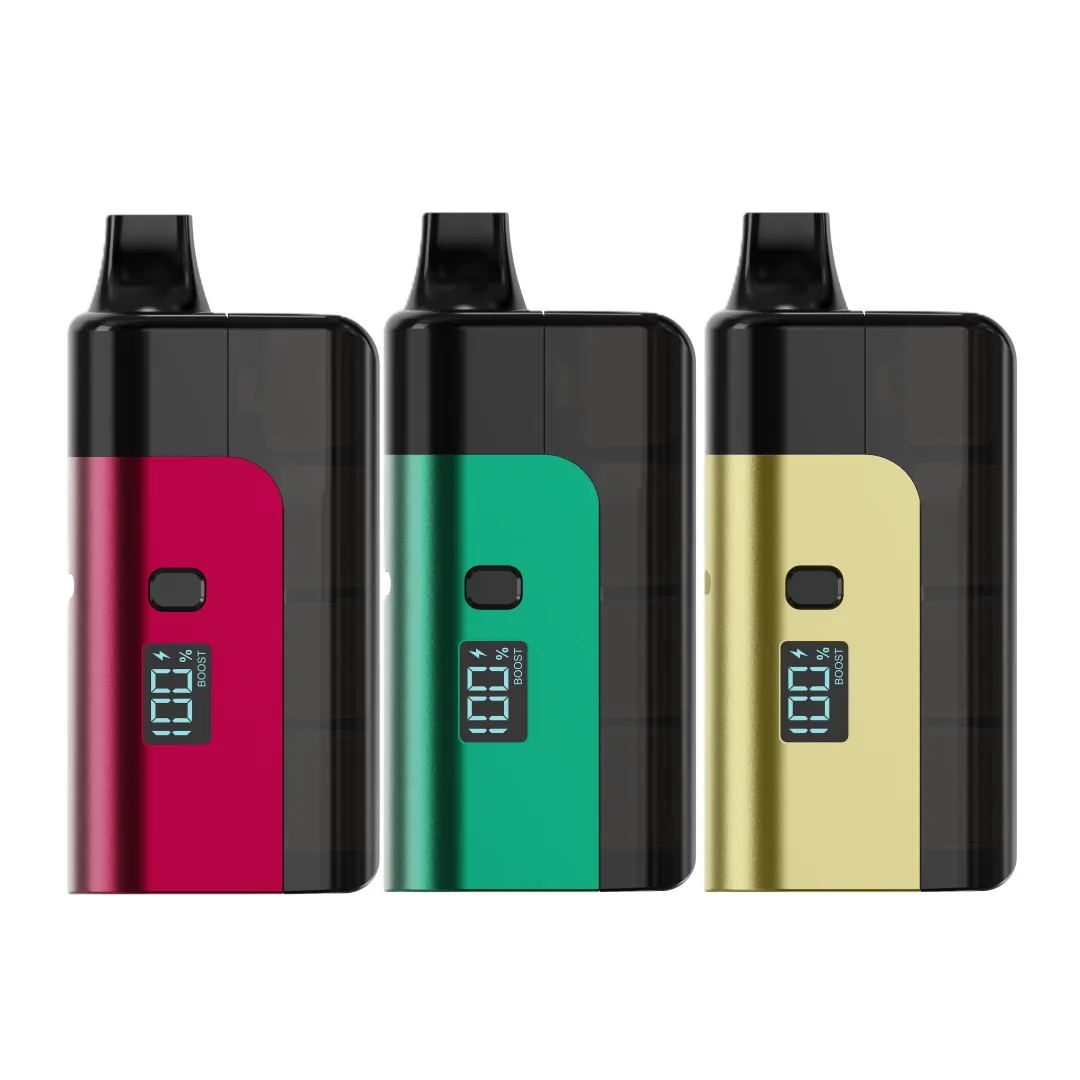
You also have a genuine choice of device styles. Prefilled pod kits take sealed, ready-filled pods and require no maintenance beyond charging: click a pod in, vape, swap it when it runs dry. Refillable pod kits let you fill with any e-liquid you like, which is considerably cheaper to run over months but asks for a little more involvement, since you are topping up liquid and changing coils periodically.
Neither of those choices exists in the pouch world, where the product is the product and there is no hardware at all. That is a genuine advantage for pouches in terms of simplicity, and a genuine disadvantage in terms of how much you can tune the experience to your own preferences. A vaper who finds their setup too harsh, too weak, too warm or too cloudy has half a dozen levers to pull. A pouch user has one: buy a different can next time.
Which Gives You Nicotine Faster, Pouches or Vaping?
Vaping, comfortably. The difference is not marginal, it is structural, and it is the single most important practical distinction between the two formats.
Inhaled nicotine reaches the brain within seconds because the lungs present an enormous, extremely thin absorption surface directly connected to the arterial circulation. That near-instant feedback loop is a large part of why smoking is so habit-forming, and it is why vaping works so well as a smoking substitute: the timing of the reward matches what an ex-smoker's brain expects.
Oral absorption through the gum is a slower road. Nicotine from a pouch typically begins to register within a few minutes and builds gradually over the following fifteen to thirty minutes, reaching a gentler peak and then tapering off over the life of the pouch. You get roughly comparable total nicotine over the session, but you get it spread out rather than delivered in a burst.
This has real consequences for how you use each product:
- Craving relief: a vape can kill an acute craving in under a minute. A pouch takes longer to take the edge off, which is frustrating in the first week and largely irrelevant once your nicotine levels stabilise.
- Steadiness: pouches keep blood nicotine flatter across the day, which some people find reduces the number of times they think about nicotine at all.
- Overuse risk: the slow onset of a pouch can tempt beginners into stacking a second one too early, before the first has fully kicked in. That is the usual cause of the nausea and dizziness newcomers report.
It is worth noting that neither format produces the kind of pronounced head rush that people associate with a first cigarette of the day, and nor should it. That sensation is largely a feature of nicotine arriving in a large, sudden dose into a system that has been depleted overnight, and both vaping and pouches tend to keep levels steadier than a smoking pattern does.
In short: vaping delivers nicotine in seconds and suits acute cravings. Pouches deliver it over tens of minutes and suit steady, all-day maintenance.
Which Is More Discreet, Nicotine Pouches or Vaping?
Pouches win this one outright, and it is not close. A nicotine pouch produces no vapour, no smoke, no smell and no sound. Once it is in place, the only visible sign is a very slight fullness in the upper lip that most people would never notice. You can use one in a meeting, on a train, in a cinema, in a lecture theatre, in a hospital waiting room, during a long-haul flight, or at your desk in an open-plan office, without anyone being any the wiser.
Vaping, by contrast, is inherently visible. Even a low-power pod kit taken with a discreet mouth-to-lung draw produces a visible plume and a noticeable sweet smell that lingers. In the UK, vaping is banned on public transport, on flights, in most hospitality venues, on hospital grounds, in schools, and in the overwhelming majority of workplaces. Legally, vaping is not covered by the same smoke-free legislation that covers cigarettes, but in practice almost every venue and employer treats it the same way, and enforcement is entirely at their discretion. Our UK vape laws 2026 guide covers where the legal lines actually sit.
For a lot of people this single factor decides the whole debate. If your job involves long stretches where you physically cannot step outside, a pouch is not just more convenient, it is the only one of the two that works at all. Shift workers, drivers, nurses, cabin crew, teachers, tradespeople on site and anyone in a client-facing role tend to arrive at pouches for exactly this reason.
There is one caveat worth stating plainly: discretion is not the same as permission. Some workplaces, venues and airlines have their own policies on oral nicotine products regardless of whether they produce vapour. Being invisible does not automatically make it allowed.
Which Has Better Flavour, Nicotine Pouches or Vapes?
Vaping wins on flavour, and again it is not particularly close, though pouches have improved enormously in the last few years.
E-liquid flavour is a mature craft. Because you are inhaling a heated aerosol, you get both taste and aroma working together, which is how flavour actually works in the human body. That gives e-liquid an enormous range: layered dessert profiles, genuinely convincing fruit blends, tobacco-style flavours for people who miss the original taste, menthols and ices with real bite, drinks, sweets, bakery, and combinations that would be impossible in an oral product. You can also change flavour whenever you like by changing pod or bottle, which keeps things interesting over months rather than days.
Nicotine pouch flavour is a narrower field by nature. You are tasting a small amount of flavouring released slowly into saliva, without any aroma component from inhalation. The palette is dominated by mint, spearmint, menthol and cool profiles, because those work best at that release rate, with citrus, berry, coffee and tropical options filling out the rest. They are pleasant, and the cooling profiles in particular are genuinely refreshing, but nobody would describe a pouch as a flavour experience in the way a good e-liquid can be. Our best nicotine pouches guide covers which flavour families tend to land well with newcomers.
There is also a duration difference. A vape gives you a fresh burst of flavour every time you draw. A pouch is at its most flavourful in the first ten minutes or so, then fades steadily, so the back half of a pouch is mostly nicotine with a memory of mint. Whether that matters depends entirely on what you want the product for. If flavour variety is a major part of why you enjoy nicotine, vaping is the clear pick. If flavour is incidental and you just want the nicotine dealt with quietly, pouches are perfectly adequate and the fade is irrelevant.
Which Is Cheaper in the UK, Pouches or Vaping?
Both are dramatically cheaper than smoking, which is the comparison that matters most for anyone arriving here from cigarettes. Between the two, the honest answer is that it depends heavily on which type of vaping you mean and how many pouches you get through.
- Refillable vaping is usually the cheapest option overall. Once you own the device, you are buying e-liquid in bottles and replacing coils occasionally. Cost per day is genuinely low, and for a moderate user it tends to undercut a daily pouch habit. The trade-off is a little maintenance.
- Prefilled pod kits sit in the middle. You pay a premium for the convenience of sealed pods, and cost scales directly with how much you vape. Heavy users feel this more than light users, because there is no economy of scale to be had.
- Nicotine pouches are broadly comparable to prefilled pods for a typical user. You buy by the can, a can contains a fixed number of pouches, and your spend is entirely predictable because there is no hardware, no coils and no chargers. What you see is what you pay.
The variable that catches people out is consumption drift. Vaping has no natural stopping point, so it is easy to drift upwards without noticing, and your spend drifts with it. Pouches are self-limiting in a useful way: a can holds a countable number, so you can see exactly how fast you are going through them. Some people find that visibility alone keeps their intake honest.
There is also a zero upfront cost point in favour of pouches. There is no device to buy, nothing to charge, nothing to break and nothing to replace when you drop it down a drain. If you want to model your own vaping spend properly, our vape cost calculator lets you put real numbers against your own habits rather than relying on averages that may not describe you at all.
Which Is More Satisfying for Ex-Smokers?
This is where the psychology matters more than the pharmacology, and where most switching attempts succeed or fail.
Smoking is not one habit, it is two bolted together. There is the nicotine dependence, and there is the behavioural ritual: the hand-to-mouth motion, the inhale, the pause, the excuse to step outside, the punctuation it puts on the day. Plenty of people who fail to quit are not defeated by the nicotine at all, they are defeated by the missing ritual.
Vaping replaces both. You hold something, you raise it to your mouth, you inhale, you exhale something visible, you take a break to do it. The correspondence is close enough that most switchers report the transition feeling natural within days. That is a large part of why UK health bodies regard vaping as one of the most effective tools available for stopping smoking, and why our switching from smoking to vaping guide is the piece most new arrivals need first.
Pouches replace only the nicotine, and for some people that is a feature. If you have come to resent the ritual itself, if you want to stop putting things in your mouth and inhaling them, or if you have already stopped smoking and want to keep nicotine without keeping the habit shape, pouches let you decouple the two. Several long-term vapers move to pouches for precisely this reason: they no longer want the device in their hand all day.
The pattern we see repeatedly is that heavier smokers and recent quitters do better starting with vaping, while people who are already stable on nicotine and want to simplify their lives often drift towards pouches later. Neither route is more legitimate than the other.
How Do Nicotine Strengths Compare Between Pouches and Vapes?
They do not compare directly, and treating the milligram numbers as equivalent is the single most common mistake people make when switching between formats.
The numbers measure different things entirely:
- E-liquid strength is a concentration. A 20mg/ml nic salt contains twenty milligrams of nicotine in every millilitre of liquid. How much nicotine you actually absorb depends on how much liquid you get through, how the device is powered, how you draw, and how long your sessions are. The UK cap under the Tobacco Products Directive is 20mg/ml, with pods limited to 2ml and bottles to 10ml.
- Pouch strength is a total content per pouch. An 11mg pouch contains eleven milligrams of nicotine in that specific pouch. But you never absorb all of it. A meaningful share stays in the pouch or is swallowed with saliva and largely destroyed by first-pass metabolism in the liver, so the amount that actually reaches your bloodstream is substantially lower than the number on the tin.
The upshot is that a 20mg/ml e-liquid and an 11mg pouch are not two versions of the same dose, and you cannot map one onto the other with arithmetic. You have to calibrate by feel.
Practical advice when moving between formats: start one step below where you think you belong. A 20mg vaper trying pouches for the first time should not reach for the strongest can on the shelf; a mid-strength pouch is a much better first experiment, because the slow onset makes it very easy to overshoot before you realise. Equally, a regular pouch user picking up a vape should not assume they need maximum strength nic salt, because the inhaled route is far more efficient. Our how much nicotine is in a vape guide unpacks the e-liquid side of this properly.
In short: pouch mg and e-liquid mg/ml are different units measuring different things. Never assume a like-for-like swap, and always start lower than you expect when trying a new format.
Is Snus the Same as a Nicotine Pouch?
No, and the distinction matters legally as well as practically, which is why the snus vs vape comparison is really a different question from the pouches one.
Traditional snus is an oral tobacco product. It contains moist ground tobacco leaf, usually pasteurised, packed loose or in a pouch, and placed under the lip in the same way. Because it contains actual tobacco, it looks brown, it tastes distinctly of tobacco, and it falls under tobacco legislation.
A nicotine pouch contains no tobacco leaf at all. It is white, the filler is plant fibre or cellulose, and the nicotine is added rather than being present in a leaf. That single difference in composition is what puts the two products in different legal categories in the UK. The sale of oral tobacco, snus included, is prohibited in the UK, a restriction retained after leaving the EU. Tobacco-free nicotine pouches are not caught by that prohibition and are legally sold here. We cover this properly in is snus legal in the UK.
People use the words interchangeably in everyday speech, and you will constantly see nicotine pouches called snus online. It is harmless shorthand in conversation, but if you are trying to understand what you can legally buy in the UK, the difference is the whole point. When someone in Britain talks about buying snus, what is actually available to them is a tobacco-free nicotine pouch.
Brand names cause the same confusion. Searches for things like Zyn vs vape are really asking about nicotine pouches in general versus vaping in general, because that brand has become a generic shorthand for the category in the way Hoover did for vacuum cleaners. The comparison in this article applies to the whole format regardless of which brand you end up preferring.
Are Nicotine Pouches Safer Than Vaping?
Nobody can honestly tell you which is safer, because the research needed to answer that question does not exist yet. Anyone who states it confidently is guessing, and you should discount what they say accordingly.
Here is what can be said with reasonable confidence:
- Both are considerably less harmful than smoking. The overwhelming majority of the harm from cigarettes comes from combustion, from inhaling the thousands of compounds produced by setting plant matter on fire. Neither vaping nor pouches involve burning anything, which removes the main source of risk. UK health bodies have consistently taken the position that vaping is substantially less harmful than continuing to smoke.
- Neither is risk-free. Nicotine itself is an addictive stimulant. It raises heart rate and blood pressure in the short term, and it is not recommended for anyone who is pregnant, breastfeeding, or has certain cardiovascular conditions. If you do not currently use nicotine, the right amount of both products is none.
- They carry different side-effect profiles. Vaping most commonly causes dry mouth, throat irritation and occasional coughing. Pouches most commonly cause gum irritation, soreness or receding at the placement site, hiccups, and nausea if used too strong or too soon after the last one.
- There is no reliable long-term head-to-head evidence. Both product categories are young in population terms. We have decades of data on smoking and comparatively little on either of these.
A reasonable person might observe that a product which does not go into the lungs avoids lung-specific risks, and that a product which does not sit against gum tissue avoids gum-specific risks. Both observations are true and neither settles the question. If you are already using one of them and are comfortable, switching on speculative safety grounds is not obviously rational. If you are considering either one and you do not currently smoke or use nicotine, the clear answer is not to start.
If you have specific health concerns, particularly around blood pressure or cardiovascular health, speak to a pharmacist or GP rather than an internet article. Our piece on does vaping increase blood pressure sets out what is currently understood on that front.
Are Nicotine Pouches and Vaping Both Legal in the UK?
Yes, both are legal for adults in the UK, but they sit in different regulatory boxes and the rules around each are not identical.
Vaping is regulated under UK law derived from the Tobacco Products Directive. The headline rules are a 20mg/ml nicotine cap on e-liquid, a 2ml maximum tank or pod capacity, a 10ml maximum bottle size for nicotine e-liquid, mandatory ingredient notification, health warnings, child-resistant packaging, and a strict minimum age of 18 for purchase. Single-use disposable vapes are now banned from sale in the UK, which is why the market has shifted so heavily towards rechargeable prefilled and refillable pod systems that deliver an almost identical experience with far less waste.
Nicotine pouches are legal to sell because they contain no tobacco, which keeps them outside the oral tobacco ban. They have historically been regulated as general consumer products rather than as tobacco products, and UK legislation has been moving to tighten the framework around them, including formalising a minimum age of sale. Responsible UK retailers already apply a strict 18+ policy and age verification as standard, and you should treat any seller that does not as a seller to avoid.
Practical points worth knowing whichever you choose:
- Buy from UK retailers selling compliant stock. Grey imports can exceed UK limits or carry inaccurate labelling.
- Age verification is not optional. Expect to prove you are 18 or over at checkout and potentially on delivery.
- Travel rules differ by country. Several countries restrict or ban nicotine pouches, vaping products, or both. Check before you fly rather than at the airport.
When Do Nicotine Pouches Win?
There are situations where pouches are simply the better tool, regardless of what you generally prefer:
- At work, when you cannot step outside. Hospital shifts, classrooms, warehouses, client meetings, customer-facing retail, driving jobs, anywhere that a vape break is impractical or prohibited.
- On flights and long journeys. Vaping is banned on every commercial flight and on UK rail and bus services. A pouch gets you through a long-haul flight without a nicotine crash.
- In social settings where vapour is unwelcome. Someone else's home, a restaurant, a wedding, a gym, a colleague's car.
- When you want to stop inhaling anything. Some people simply do not want to keep drawing an aerosol into their lungs, and that is a perfectly coherent reason to move to an oral product.
- When you want to break the hand-to-mouth habit. If the constant device fiddling has become the problem rather than the solution, removing the device removes the behaviour.
- When you want predictable spend and zero hardware. No charging, no coils, no leaks, nothing to lose or break, and a countable number of doses per can.
- During sport or exercise. Plenty of people find vaping and cardio an unpleasant combination.
If any two or three of those describe your week, pouches are worth a serious trial. Start at a modest strength, place the pouch properly under the upper lip rather than pushing it down between teeth and cheek, and give it a full session before judging it. The technique genuinely matters, and a bad first experience puts people off a product that would otherwise have suited them well.
When Does Vaping Win?
Equally, there are situations where a vape is clearly the stronger choice:
- You have just stopped smoking, or are trying to. The behavioural match is the single biggest advantage vaping has, and in the first few weeks of quitting it matters more than anything else on this list.
- You get strong, sudden cravings. Fast delivery beats steady delivery when the problem is an acute spike you need dealt with now.
- You genuinely enjoy flavour. If part of the appeal is looking forward to what you are tasting, e-liquid offers a range pouches cannot approach.
- You want the lowest possible running cost. A refillable kit with bottled e-liquid is typically the cheapest way to maintain a nicotine habit in the UK, by a reasonable margin.
- You have gum sensitivity or dental concerns. Pouches sit directly against gum tissue for long stretches, which does not suit everyone.
- You want to taper nicotine gradually. E-liquid is available across a fine-grained range of strengths right down to zero, which makes stepping down straightforward in a way that pouch strengths, which come in a handful of coarse steps, do not.
- You are mostly at home or somewhere vaping is fine. The discretion advantage of pouches is worth nothing if you never needed discretion in the first place.
If that list describes you better than the previous one, a simple pod system is the right place to start. Convenience-first buyers should look at sealed prefilled pods; anyone prioritising running cost should look at a refillable pod kit with bottled e-liquid, accepting a small amount of upkeep in exchange for a much lower cost per week.
Can You Use Nicotine Pouches and Vape at the Same Time?
Yes, and a surprisingly large number of people do exactly that. Treating this as an either-or decision is a false choice that suits article headlines more than it suits real life.
The most common dual-use pattern looks like this: pouches during the constrained parts of the day, vaping during the unconstrained parts. A pouch on the commute, through the morning at a desk, and in meetings. A vape at home in the evening, on a break outside, at the weekend. The pouch handles the periods where a vape is impossible; the vape handles the periods where flavour and satisfaction are the priority.
Other patterns people settle into:
- Pouch as a backstop. Primarily a vaper, but keeps a can in the bag for flights, hospital visits, long meetings and dead phone batteries.
- Vape as a craving tool. Primarily a pouch user, but keeps a pod kit for the occasional sharp craving that a pouch is too slow to catch.
- Transitional dual use. Deliberately shifting the ratio over weeks or months while moving from one format to the other, rather than switching cold.
The one thing to watch is total intake. Two delivery systems make it easier to consume more nicotine overall without noticing, particularly if you start using one out of habit rather than need. A simple check: if you are putting in a pouch immediately after a vaping session purely because it is what you do, rather than because you actually want nicotine, your total has probably drifted. Rough awareness of your daily count in both formats is enough to keep it honest.
In short: dual use is common, practical and perfectly legitimate. Just keep a rough eye on your combined intake, because two habits are easier to overshoot with than one.
Nicotine Pouch vs Vape: Which Should You Choose?
Work through these questions in order and the answer usually falls out within a minute.
- Are you currently smoking and trying to stop? Start with vaping. The behavioural replacement matters enormously in the early weeks, and the evidence base for vaping as a quitting aid is stronger than for any other consumer nicotine product. Pick a device from the best vape for quitting smoking guide and give yourself a fortnight before judging it.
- Does your day include long stretches where vaping is impossible? If yes, you need pouches either as your main format or as a companion. No amount of preference beats the fact that you physically cannot use a vape in a cockpit or on a ward.
- Do you actively want to stop inhaling? If yes, go straight to pouches. That is the format's core purpose, and no amount of device tinkering will give a vape the same property.
- Is flavour a significant part of the enjoyment for you? If yes, vaping. If flavour is irrelevant and you just want the nicotine handled quietly in the background, pouches will not disappoint you.
- Is running cost your main concern? Refillable vaping is typically cheapest, while prefilled pods and pouches sit closer together. Run your own numbers rather than trusting averages.
- Are you trying to reduce or quit nicotine altogether? Vaping offers finer-grained strength steps down to zero, which makes tapering more controllable. Combine that with NHS stop-smoking support, which is free and demonstrably effective.
- Still undecided? Try both for a fortnight each. They are inexpensive relative to smoking, and two weeks of first-hand experience will tell you more than any comparison article, this one included.
Whatever you land on, buy from a UK retailer selling genuine, compliant stock, start at a sensible strength rather than the strongest thing available, and give yourself a few days to adjust before deciding it is not for you. First impressions of both formats are frequently wrong.
Frequently Asked Questions
Are nicotine pouches better than vaping?
Neither is universally better. Vaping delivers nicotine faster, offers far more flavour variety and replicates the hand-to-mouth ritual of smoking, which makes it the easier switch for most recent smokers. Nicotine pouches are completely discreet, produce no vapour or smell, and can be used in offices, on flights and anywhere vaping is banned. The right choice depends on your priorities rather than on any objective ranking.
Is a nicotine pouch stronger than a vape?
You cannot compare them directly because the numbers measure different things. E-liquid strength is a concentration in milligrams per millilitre, while pouch strength is the total milligrams contained in a single pouch, and you never absorb all of it. A 20mg/ml e-liquid and an 11mg pouch are not equivalent doses. Always start lower than you expect when trying a new format.
Which is safer, nicotine pouches or vaping?
There is no reliable long-term evidence directly comparing the two, so nobody can answer this honestly. Both avoid combustion, which is the main source of harm from smoking, and UK health bodies regard vaping as substantially less harmful than continuing to smoke. Neither is risk-free, and if you do not already use nicotine you should not start with either.
Can you use nicotine pouches on a plane?
Nicotine pouches produce no vapour or smoke, so they do not breach the vaping and smoking bans that apply on all commercial flights, and many travellers use them for exactly that reason. Vaping on a plane is banned outright. Individual airlines and destination countries can still have their own rules on nicotine products, so check before you travel.
Is snus the same as a nicotine pouch?
No. Traditional snus contains moist ground tobacco leaf and is prohibited from sale in the UK as an oral tobacco product. Nicotine pouches contain no tobacco at all, using plant fibre or cellulose filler with added nicotine, which is why they are legally sold here. People often use the word snus loosely to mean nicotine pouches, but the legal distinction is real.
Can you vape and use nicotine pouches at the same time?
Yes, and many people do. A common pattern is using pouches during work, commuting and travel where vaping is impossible, then vaping at home or on breaks. The main thing to watch is your total nicotine intake, since two delivery methods make it easier to consume more than you intended without noticing.
Are nicotine pouches cheaper than vaping in the UK?
It depends on which type of vaping you compare them to. Refillable vaping with bottled e-liquid is typically the cheapest option overall once you own the device. Nicotine pouches sit broadly in the same territory as prefilled pod kits for a typical user, with the advantage of no hardware costs and a completely predictable spend per can.
Should I switch from vaping to nicotine pouches?
It makes sense if you want to stop inhaling, need something usable where vaping is banned, or want to break the hand-to-mouth habit rather than the nicotine dependence. It makes less sense if you enjoy the flavour experience, rely on fast craving relief, or have sensitive gums. Many people keep both rather than switching entirely.
Recommended products