Vape Alternatives: What to Use Instead of Vaping (UK 2026)
The main alternatives to vaping in the UK are nicotine pouches, nicotine replacement therapy such as patches, gum and lozenges, heated tobacco, and nicotine-free options for people who want to keep the habit without the nicotine. Nicotine pouches are the most popular straight swap, because they deliver nicotine with no vapour, no smell and no device at all. NRT is the clinically supported route if your goal is to stop using nicotine altogether. Heated tobacco exists but contains real tobacco and is expensive. And if the problem is your specific device rather than vaping itself, changing the kit or the e-liquid often solves it entirely.
That is the shortlist. Which one is right for you depends almost entirely on why you are looking, and people arrive at this question for very different reasons: some want to stop inhaling, some want something usable at work, some want to cut costs, some want off nicotine completely, and some are simply annoyed that their device leaks. This guide walks through each realistic alternative, explains who it suits, sets out where each one sits legally in the UK, gives an honest qualitative ordering of relative harm, and finishes with a framework for matching the answer to your actual reason rather than to whatever is trending.
What Are the Best Alternatives to Vaping?
Here is the full realistic list for UK adults, ranked roughly by how often people actually land on each one:
- Nicotine pouches. Small tobacco-free sachets placed under the upper lip. No vapour, no smell, no device, usable anywhere. The leading like-for-like alternative for people who want to keep nicotine but stop inhaling. See nicotine pouches.
- A different vaping setup. Not technically an alternative to vaping, but genuinely the right answer for a large share of people asking, because the complaint is usually about a specific device or liquid rather than the format.
- Nicotine replacement therapy (NRT). Patches, gum, lozenges, inhalators and mouth sprays. Licensed medicines, available from any pharmacy, designed and tested as quitting aids.
- Nicotine-free vaping. Keeps the ritual and the flavour while removing the nicotine. Useful as a stepping stone rather than a destination for most people.
- Heated tobacco. Devices that heat real tobacco without burning it. Legal in the UK but tobacco-based, taxed as tobacco and therefore expensive.
- Behavioural substitution and stopping entirely. No product at all, supported by NHS stop smoking services, which are free and considerably more effective than going it alone.
In short: if you want to keep nicotine but stop vapour, choose nicotine pouches. If you want to stop nicotine, choose NRT plus NHS support. If you are just unhappy with your current device, change the device rather than the format.
Why Do People Look for a Vape Alternative?
It is worth being precise about your own reason, because the reasons point to genuinely different answers and a lot of people end up with the wrong solution simply because they never named the problem.
- They want to stop inhaling. Perfectly reasonable, and the clearest case for an oral product. Nothing else on the list solves this.
- They cannot use a vape where they need to. Offices, hospitals, classrooms, flights, public transport, client sites. A discretion problem, not a nicotine problem.
- They want to stop using nicotine altogether. A different goal again, and the one where clinical quitting tools and support genuinely outperform swapping one consumer product for another.
- The cost has crept up. Usually a symptom of using an expensive format, most often prefilled pods at high consumption, rather than of vaping being inherently pricey.
- Their disposable is no longer available. Single-use disposable vapes are banned from sale in the UK, and a lot of people who never chose a device are now being asked to.
- The device annoys them. Leaking, burnt coils, dead batteries, spitback. Hardware complaints with hardware solutions.
- Health concerns, general or specific. Sometimes a vague unease, sometimes a specific symptom such as a persistent cough or dry mouth.
- Social or household pressure. A partner who hates the smell, a workplace that has tightened its policy, children in the house.
Notice how few of those actually call for abandoning nicotine. Being honest with yourself about which one applies saves a lot of wasted money on products that were never going to address the thing bothering you.
Are Nicotine Pouches a Good Alternative to Vaping?
For most people asking this question, yes, and they are the single most popular answer in the UK right now.
A nicotine pouch is a small white sachet containing nicotine, plant fibre or cellulose filler, flavourings and pH adjusters. It contains no tobacco leaf whatsoever, which is what separates it legally from traditional snus and what allows it to be sold here. You place it between your upper lip and gum, leave it there for anywhere from twenty minutes to an hour, and the nicotine is absorbed through the lining of your mouth.
What makes it such a natural step across from vaping:
- No vapour and no smell. Nothing to see, nothing to inhale, nothing to annoy anyone nearby.
- Usable anywhere. Meetings, flights, trains, hospital waiting rooms, the office, the gym. This is the decisive advantage for most switchers.
- No device. Nothing to charge, leak, burn out, break or lose. Nothing to remember.
- Predictable cost. You buy by the can and you can count what is left.
- A real flavour range. Not vaping's range, but mints, menthols, citrus, berry, coffee and tropical options all exist.
- Nicotine strengths across a broad spread, so you can pitch it to your needs and step down over time.
The honest downsides: the nicotine arrives more slowly than from a vape, so acute cravings take longer to settle; the flavour fades in the back half of a pouch; and some people experience gum irritation or a tingling sensation, particularly at first or at higher strengths. Our nicotine pouches 101 guide covers the fundamentals, and how to use nicotine pouches covers the technique, which matters more than newcomers expect.
How Do Nicotine Pouches Compare With Vaping Day to Day?
The practical differences show up in the rhythm of your day more than in any single moment.
Speed. A vape deals with a craving in under a minute because inhaled nicotine reaches the bloodstream almost immediately. A pouch takes several minutes to register and builds gradually. In the first week that gap is frustrating; after that, most people find their baseline nicotine level evens out and the acute cravings largely stop arriving in the same way.
Duration. A vaping session is a couple of minutes repeated many times. A pouch is a single twenty to sixty minute commitment. Fewer decisions, less fiddling, less thinking about nicotine at all.
Dose numbers do not transfer. This trips almost everyone up. E-liquid strength is a concentration in milligrams per millilitre, capped at 20mg/ml in the UK. Pouch strength is the total milligrams in one pouch, and you never absorb all of it, because a meaningful share is swallowed and broken down by the liver before it does anything. A 20mg/ml e-liquid and an 11mg pouch are not the same dose in any useful sense. Start a step lower than instinct suggests.
Sensory experience. Vaping gives you throat hit, aerosol and a fresh burst of flavour on every draw. A pouch gives you a tingle and a taste that fades. If the sensory side is a large part of why you enjoy vaping, be prepared for pouches to feel plain.
We have a full side-by-side in nicotine pouches vs vaping, and the best nicotine pouches guide covers which strengths and flavours suit a first try.
In short: pouches trade speed and sensory richness for total discretion and zero hardware. Give them a fortnight before deciding, because the first few days are the least representative.
Is the Problem Your Device Rather Than Vaping Itself?
Before changing format entirely, it is worth checking whether the thing bothering you is actually the format. A surprising proportion of people searching for a vape alternative are really searching for a better vape, and they can solve the problem for the price of a pod kit rather than by rebuilding their whole nicotine habit.
Common complaints and their actual fixes:
- It does not satisfy me, so I vape constantly. Usually a nicotine strength or device style mismatch. A high-strength nic salt in a tight mouth-to-lung pod kit satisfies far more efficiently than a low-strength liquid in an airy, high-power device. See nic salts explained.
- It is costing me a fortune. Almost always a prefilled-pod habit at high volume. Moving to a refillable kit with bottled nic salts typically cuts the running cost sharply.
- It keeps leaking, burning or dying. Hardware. A decent modern pod kit from a reputable brand largely eliminates all three, and priming coils properly handles most of what remains.
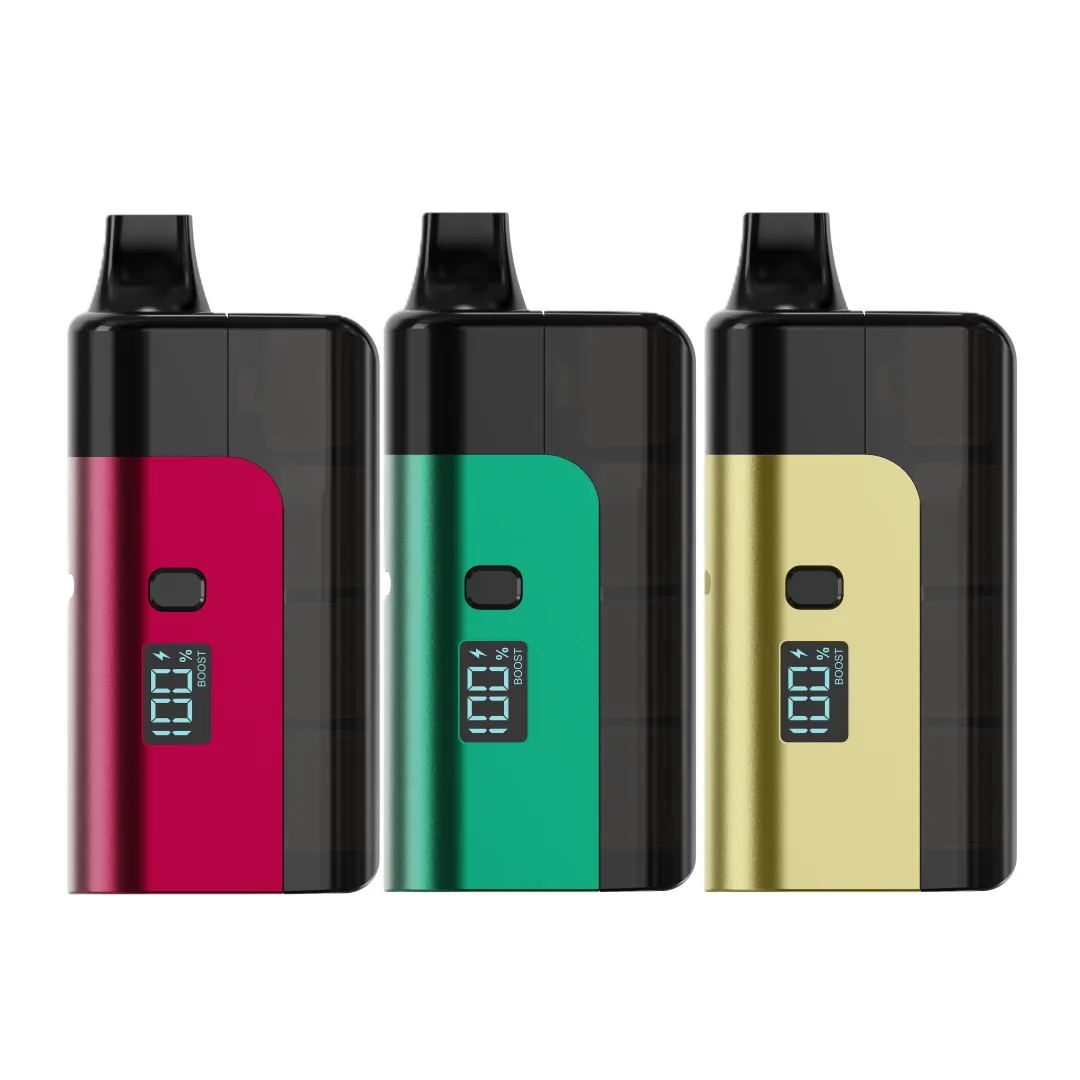
- My disposable is gone and I do not know what to buy. The direct successor is a rechargeable prefilled pod kit, which is the closest equivalent experience and is covered further down this page.
- The clouds are too big and too obvious. Switch to a low-power mouth-to-lung pod kit with a higher-PG liquid. Far less visible vapour, far less smell.
- I have a persistent cough or dry mouth. Often a PG sensitivity or simple dehydration. Worth trying a different liquid ratio and drinking more water before concluding vaping does not agree with you, and worth seeing a pharmacist or GP if it persists.
If none of those describe your problem, then the format genuinely is the issue and the rest of this guide is for you.
Is Heated Tobacco a Realistic Alternative to Vaping?
It exists, it is legal in the UK, and for a small number of people it is the right answer. For most it is not, and it is worth understanding why before you spend money on a device.
Heated tobacco, often called heat-not-burn, uses an electronic device to warm a stick of real tobacco to roughly 250 to 350 degrees Celsius, producing an aerosol without combustion. Nothing burns, so there is no ash and no smoke, but the consumable contains genuine tobacco leaf rather than an e-liquid.
The arguments against it as a vape alternative are fairly blunt:
- It is expensive. In the UK, tobacco for heating is taxed under the tobacco duty regime, so a pack of sticks sits in broadly similar territory to a pack of cigarettes. If you are leaving vaping to save money, this is the worst possible direction to move in.
- It still contains tobacco. Which means tobacco-derived compounds are present in the aerosol that simply are not present in e-liquid. UK expert review has indicated the reduction in harmful exposure compared with smoking is likely to be smaller than that achieved by vaping.
- It is not discreet. Visible device, real if milder odour, and in practice you will be using it outside like a smoker. It solves none of the discretion problems that drive most people to look for alternatives.
- There is little choice. One device, a handful of stick variants, a fixed session length.
Where it does make sense: someone who genuinely wants the taste of real tobacco, has tried vaping and could not get on with it, and is not primarily motivated by cost or discretion. That is a narrow group, but a real one. Our full explainer on what heated tobacco is goes through the technology and the evidence in detail. For the record, PinkVape does not sell heated tobacco products.
What Nicotine Replacement Therapy Options Are There?
Nicotine replacement therapy deserves a fair hearing here, because it is the only category on this list that consists of licensed medicines tested specifically as quitting aids. If your goal is to come off nicotine rather than to swap delivery methods, this is where you should be looking.
The UK options, all available from pharmacies and supermarkets without a prescription, and often free through stop smoking services:
- Patches. Worn on the skin, releasing nicotine slowly over 16 or 24 hours. They handle your baseline level rather than sudden cravings, and are available in descending strengths so you can step down methodically.
- Gum. Chewed briefly then parked against the cheek, using the same oral absorption route as a nicotine pouch. Fast-acting and useful for breakthrough cravings.
- Lozenges and mini-lozenges. Dissolved slowly in the mouth. Similar profile to gum without the chewing, which suits people with jaw or dental issues.
- Inhalators. A plastic mouthpiece with a nicotine cartridge that you draw on. The only NRT product that preserves the hand-to-mouth motion, which makes it the most familiar-feeling option for ex-smokers and vapers.
- Mouth and nasal sprays. The fastest-acting NRT formats, absorbed through the lining of the mouth or nose.
Two things are worth knowing. First, combination NRT works better than a single product: a patch for your baseline plus a fast-acting product such as gum, lozenge or spray for cravings is standard practice in UK stop smoking services and is more effective than either alone. Second, NRT is licensed to help people stop smoking, so if you are using it to come off vaping, speak to a pharmacist or a stop smoking adviser about how to pitch the dose. They deal with this constantly and the advice is free.
Is Nicotine-Free Vaping a Good Alternative?
It has a genuine place, provided you are clear about what problem it solves and what it does not.
Zero-nicotine e-liquid keeps everything about vaping except the nicotine: the device, the flavour, the throat feel, the hand-to-mouth ritual, the little break in the day. For someone whose attachment is substantially behavioural, that can be enough, and it is a well-trodden final step for people who have tapered their nicotine strength down over months and are ready for the last rung.
Where it works well:
- As the end of a step-down. Going 20mg, then 10mg, then lower, then zero is a far more manageable path than jumping from a full-strength liquid to nothing.
- For the habit, not the substance. If you genuinely miss the action more than the nicotine, 0mg removes the dependence while leaving the behaviour intact.
- As a partial swap. Some people keep a nicotine device for mornings and a 0mg device for evenings, which reduces total intake without demanding a clean break.
Where it works badly:
- Jumping straight to 0mg from a high strength. This usually ends in either relapse or in vaping constantly while feeling unsatisfied, because you are chasing something that is not in the liquid.
- As a permanent destination when the goal was to stop inhaling. If the reason you wanted an alternative was to stop drawing an aerosol into your lungs, removing the nicotine does not address that at all.
Note too that nicotine-free vapes are still age-restricted in practice and are covered by the same ban on single-use disposables regardless of whether they contain nicotine. Our nicotine free vape guide goes into how to taper sensibly rather than heroically.
What Can You Use Instead of a Vape if You Want to Quit Nicotine Entirely?
If the destination is no nicotine at all, then the honest answer is that no product gets you there. Products can make the transition easier, but the work is behavioural, and that is worth stating plainly rather than dressing up.
What actually helps, based on how UK stop smoking services approach it:
- A planned taper rather than a cliff edge. Step your nicotine strength down gradually over weeks, and let each step stabilise before the next one. Sudden cessation has a much higher failure rate for most people.
- Identify your triggers before you stop. Most nicotine use is cued: the coffee, the drive, the phone call, the break with a colleague, the moment you sit down after work. Write them down and plan a specific replacement for each one.
- Physical substitutes for the hand-to-mouth habit. Sugar-free gum, mints, a water bottle, sunflower seeds, a fidget object. These sound trivial and they are surprisingly effective, because they occupy the same behavioural slot.
- Change the routine, not just the product. If you always vaped on the balcony after dinner, go for a walk after dinner instead. Breaking the cue is easier than resisting it.
- Short-term NRT. Using patches or lozenges for a few weeks while you rebuild the routine is not a failure, it is the standard clinical approach.
- Expect the first fortnight to be the worst. Nicotine clears the body fairly quickly, and our guide on how long nicotine stays in your system covers the timeline. The habit takes considerably longer to fade than the substance does.
- Tell people. Social accountability genuinely improves the odds, and it removes the awkwardness of being offered a vape.
Most importantly: a lapse is not a relapse. The evidence is consistent that people who resume after a slip do far better than people who treat one slip as proof the attempt has failed.
How Do You Match the Alternative to Your Reason?
This is the part that saves you money. Find your reason in the left column and the answer is on the right.
- You want to stop inhaling anything. Nicotine pouches, or NRT such as patches, gum and lozenges. These are the only options that fully remove inhalation from the equation.
- You need something usable at work, on flights or in public. Nicotine pouches, without competition. Nothing else is genuinely invisible.
- You want to save money. Stay with vaping but switch to a refillable kit with bottled e-liquid. Run your own figures with the vape cost calculator before assuming another format will be cheaper, because usually it is not.
- You want to stop using nicotine completely. A staged step-down, plus NRT, plus free NHS stop smoking support. Products alone rarely do it.
- Your disposable is banned and you need a replacement. A rechargeable prefilled pod kit is the direct successor. See prefilled pod kits vs disposable vapes for how they differ in practice.
- You miss the taste of real tobacco. Try a good tobacco nic salt first. If that genuinely fails you, heated tobacco is the only product that uses actual tobacco, at a considerable price.
- Someone at home objects to the smell. Nicotine pouches produce none at all. Failing that, a low-power mouth-to-lung setup with a less sweet liquid dramatically reduces what lingers.
- You are worried about your lungs specifically. Any oral route, pouches or NRT, removes the respiratory exposure entirely. Discuss any persistent symptoms with a pharmacist or GP rather than self-diagnosing.
- You just want the habit gone. Behavioural work, support, and time. There is no shortcut and anyone selling you one is selling you something.
How Do the Alternatives Rank on Harm?
Any ranking here has to be qualitative, because the precise evidence needed for a numerical ordering does not exist, and anyone offering you percentages is overstating what is known. What can be said is that the broad ordering below is one most UK public health experts would recognise as reasonable.
From lowest risk to highest:
- Using nothing at all. Always the lowest-risk option, and the honest baseline. If you do not currently use nicotine, do not start with any product on this list.
- Licensed NRT. Medically regulated, extensively studied, designed to be used short term. As close to a known quantity as nicotine products get.
- Nicotine pouches and vaping. Broadly grouped together. Both avoid combustion and both avoid tobacco leaf. There is no reliable long-term head-to-head evidence between them, and their risks differ in kind rather than obviously in degree: pouches carry oral and gum effects, vaping carries respiratory ones.
- Heated tobacco. Lower risk than smoking because there is no combustion, but it contains tobacco, and UK expert review suggests the reduction in exposure is likely smaller than that from vaping.
- Smoking. By a very wide margin the most harmful, because combustion generates the overwhelming majority of the harmful compounds involved.
Three caveats matter. First, this ordering is about relative risk, not safety: nicotine is addictive and none of these products is recommended for non-users, under-18s or anyone pregnant. Second, the gaps between the middle rungs are much smaller than the gap between all of them and smoking, so a smoker moving to any of them is making a meaningful change. Third, nobody should switch between two lower-risk options purely on speculative safety grounds, because the evidence to justify that specific move does not yet exist.
In short: nothing is lowest, NRT and pouches and vaping sit broadly in the middle, heated tobacco higher, smoking far above everything. The big drop is leaving combustion behind, not choosing between the smoke-free options.
Which Vape Alternatives Are Legal in the UK?
All of the options discussed here are legal for adults in Britain, but they sit in different regulatory categories with different rules, and one common assumption is wrong.
- Vaping products: legal, regulated under the framework derived from the Tobacco Products Directive. Nicotine e-liquid is capped at 20mg/ml, pods and tanks at 2ml, nicotine bottles at 10ml. Strictly 18+. Our UK vape laws 2026 guide covers the detail.
- Single-use disposable vapes: banned from sale in the UK, and the ban applies whether or not the device contains nicotine. Rechargeable prefilled and refillable pod kits are the legal successors.
- Nicotine pouches: legal to sell because they contain no tobacco, which keeps them outside the oral tobacco ban. UK legislation has been tightening the framework around them, including formalising a minimum age of sale, and responsible retailers already operate strict 18+ age verification.
- Snus: not legal to sell in the UK. Traditional snus is an oral tobacco product and oral tobacco remains prohibited here, a restriction retained after leaving the EU. This is the assumption people most often get wrong, because snus and nicotine pouches are widely treated as the same thing in conversation.
- Heated tobacco: legal, classified and taxed as a tobacco product, with tobacco-style health warnings, retail display restrictions and an 18+ age of sale.
- NRT: legal and licensed as medicines, available over the counter in pharmacies and supermarkets, and often supplied free through stop smoking services.
Two practical notes. Buy from UK retailers selling compliant stock, because imported products can exceed UK limits or carry inaccurate labelling. And check the rules of any country you are travelling to, since several ban nicotine pouches, vaping products or both regardless of what is legal at home.
What Replaced Disposable Vapes in the UK?
Rechargeable prefilled pod kits, overwhelmingly. If you are here because your usual disposable vanished from the shelves, this is the section you actually need.
A prefilled pod kit is a small rechargeable device that takes sealed, ready-filled pods. You charge the battery, click in a pod, and vape until it is empty, then swap the pod rather than binning the whole thing. From the user's point of view it is almost identical to a disposable: no filling, no coil changes, no settings, usually draw-activated so there is no button to press. The difference is that the battery is reused, which is both cheaper and the entire point of the legislation.
What to expect when you move across:
- Similar flavour and strength. Pods use nic salts at up to 20mg, exactly as disposables did.
- Better value. You buy pods rather than complete devices, so the cost per week drops noticeably.
- You need to charge it. Most kits charge over USB-C in well under an hour, but it is a new habit to build.
- A wider flavour range than disposables ever offered, because pod ranges are larger than single-device line-ups.
Browse the prefilled pod kits range for the format, and if you want a shortlist rather than the full catalogue, our best disposable vape alternatives guide picks out the kits that most closely reproduce the disposable experience.
Worth saying clearly: if disposables are the only vaping you have ever done, do not conclude from their disappearance that you need to leave vaping altogether. The replacement format is better in almost every respect, and it takes about a day to adjust.
Does the NHS Help You Stop Vaping?
Yes, and this is genuinely the most underused resource in this entire guide.
Local NHS stop smoking services exist across the UK, they are free, and while they were built around smoking, advisers routinely support people who want to come off vaping or other nicotine products too. What they offer is the combination that the evidence consistently supports: behavioural support alongside a suitable product, rather than either on its own.
In practice, that means:
- A trained adviser who talks through your triggers, your history and a realistic plan, rather than a generic internet article.
- Access to NRT, often free or at prescription cost, including combination therapy that you might not think to set up yourself.
- Regular check-ins over the first weeks, which is exactly the period when most attempts fail.
- No judgement, and no pressure to commit to a timeline that does not suit you.
You can find your local service through the NHS website or by asking at a pharmacy or GP surgery. Many pharmacies run the service directly, so it can be as simple as speaking to the person behind the counter next time you are in.
The reason this matters: people who combine support with a substitute product have substantially better odds than people who try to do it alone with willpower. That is one of the most consistent findings in the whole field, and it costs you nothing to take advantage of.
How Do You Make the Switch Actually Stick?
Whichever alternative you pick, the same handful of things separate the people who switch successfully from the people who drift back within a fortnight.
- Order the new thing before you run out of the old thing. The single most common cause of relapse is a gap. If you finish your last pod on a Friday night with nothing else in the house, you know how that ends.
- Get the strength right at the start. Too low and you will be dissatisfied and give up on the format; too high and you will feel queasy and blame the product. For pouches specifically, start at a middling strength rather than the strongest available.
- Give it two weeks, not two days. First impressions of a new format are almost always unrepresentative, because you are comparing an unfamiliar experience against a deeply established habit.
- Change one variable at a time. Switching format, strength and flavour simultaneously means that when something feels wrong you will have no idea which change caused it.
- Keep a fallback for the first week. Having your old device in a drawer is not cheating, it is insurance. Most people find they simply stop reaching for it.
- Plan for the hard moments specifically. The first coffee, the drive home, the pub, the stressful afternoon. Decide in advance what you will do in each, rather than improvising when the craving arrives.
- Track what you are actually using. A rough count of pouches or pods per day tells you whether your intake is drifting up, which is otherwise very easy to miss.
- Do not stack formats without noticing. Using pouches at work and vaping at home is a perfectly sensible pattern, but it does make it easier to consume more nicotine overall than you intended.
In short: pick the alternative that matches your actual reason, buy it before you run out of what you have, start at a sensible strength, and give it a fortnight before you judge it. Most failed switches are logistics problems, not willpower problems.
Frequently Asked Questions
What is the best alternative to vaping?
For most UK adults who want to keep nicotine but stop inhaling, nicotine pouches are the leading alternative. They are tobacco-free, produce no vapour or smell, need no device, and can be used in offices, on flights and anywhere vaping is banned. If your goal is to stop using nicotine altogether, licensed nicotine replacement therapy combined with NHS stop smoking support is the better route.
What can I use instead of a vape?
The realistic options are nicotine pouches, nicotine replacement therapy such as patches, gum, lozenges, inhalators and sprays, nicotine-free vaping if you want to keep the ritual without the nicotine, or heated tobacco, which contains real tobacco and is expensive. Many people asking this question actually need a different vaping setup rather than a different format entirely.
Are nicotine pouches better than vaping?
Neither is universally better. Pouches win comprehensively on discretion, have no device to maintain and can be used anywhere, while vaping delivers nicotine faster, offers far more flavour variety and better replicates the hand-to-mouth ritual. Which is better depends entirely on whether inhaling or being discreet matters more to you.
What is the healthiest alternative to vaping?
Using no nicotine at all is always the lowest-risk option. Among products, licensed nicotine replacement therapy is the most studied and is regulated as a medicine. Nicotine pouches and vaping sit broadly together in the middle of the range, heated tobacco is higher because it contains tobacco, and smoking is by far the most harmful of all. No precise ranking exists, so treat this as a rough ordering rather than a measurement.
Can NRT help me stop vaping?
Yes. Patches, gum, lozenges, inhalators and sprays are licensed to help people stop smoking, and stop smoking advisers routinely use them to support people coming off vaping too. Combination therapy, a patch for your baseline plus a fast-acting product for cravings, works better than a single product alone. Ask a pharmacist how to pitch the dose for your situation.
What replaced disposable vapes in the UK?
Rechargeable prefilled pod kits are the direct successor. They take sealed, ready-filled pods, require no refilling or coil changes, and use the same nic salt strengths up to 20mg that disposables did. The only real difference is that you charge the battery and swap pods rather than throwing the whole device away, which makes them cheaper to run.
Is nicotine-free vaping a good way to quit?
It works well as the final step of a gradual taper, when you have already reduced your nicotine strength over several weeks and mainly miss the habit. It works badly as a sudden jump from a high strength, which usually leads either to relapse or to vaping constantly while feeling unsatisfied. It also does not help if your reason for quitting was to stop inhaling.
Is snus a legal alternative to vaping in the UK?
No. Traditional snus contains moist ground tobacco and the sale of oral tobacco remains prohibited in the UK. Tobacco-free nicotine pouches are legal and are what British shoppers are actually buying when they search for snus. The two products look similar and are used the same way, but only one of them can legally be sold here.
Recommended products